
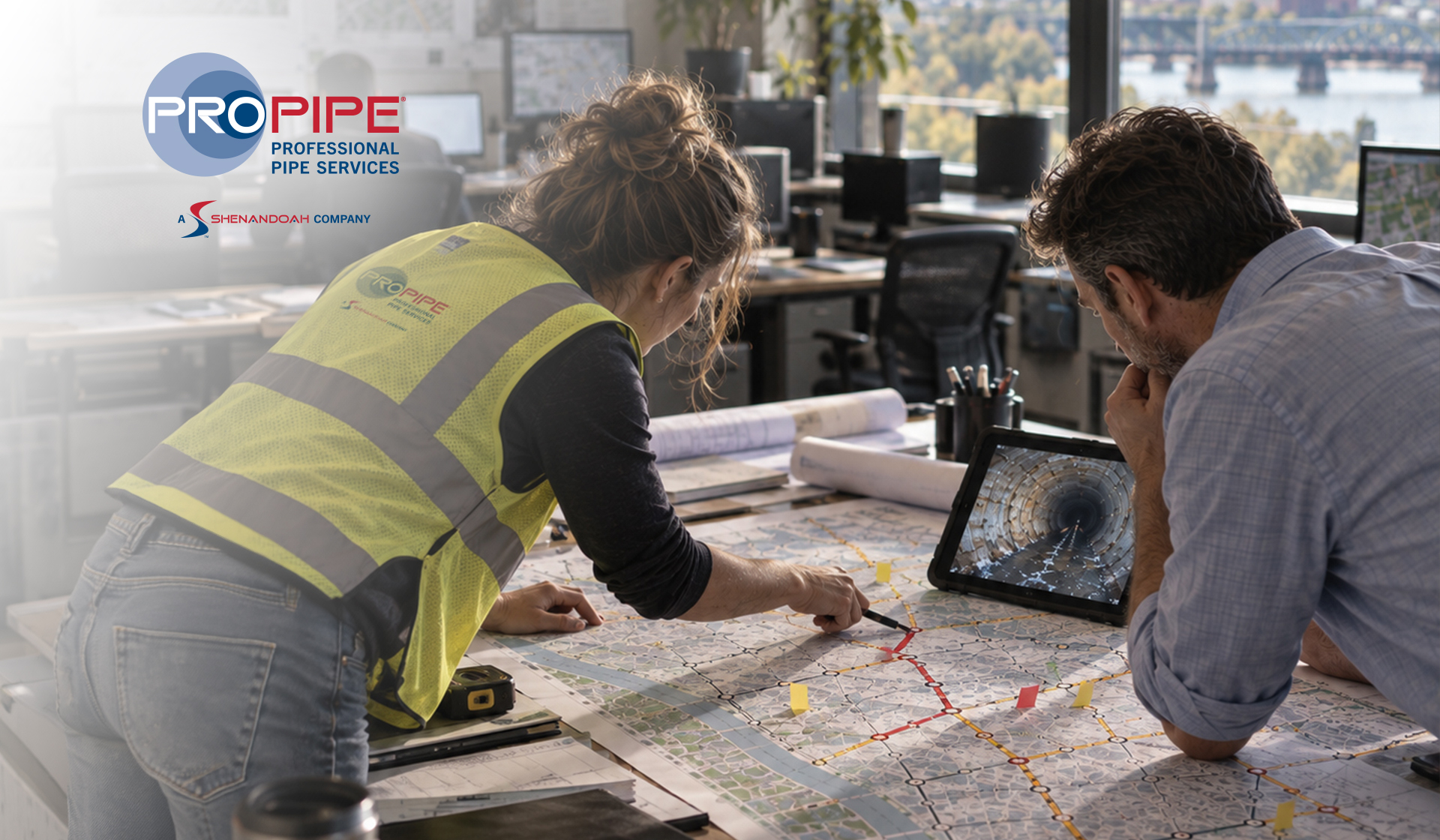
Many public works departments have more inspection video than they can use. Footage often sits on hard drives or disconnected servers while capital improvement plans still rely on pipe age, old as-built drawings, and best guesses.
That gap costs money. Without organized condition data, a city may replace a full pipe run when a spot repair would work. It may also miss a serious defect until an emergency forces the decision.
Old Records Leave Blind Spots
Paper maps and legacy drawings may not show later changes to the system. Manholes show where you can get into the system, but not what the pipe looks like between access points.
Pipeline condition assessment closes that gap. It replaces assumptions with verified information about pipe material, alignment, defects, and structural condition.
Collect Data You Can Trust
Robotic CCTV pipeline inspection lets crews inspect sewer mains and document cracks, root intrusion, joint problems, and other defects. Lateral launch systems let crews inspect service laterals from the mainline without excavation.
When conditions call for more detail, Pro-Pipe pairs CCTV with laser, LiDAR, and sonar profiling. Sonar helps assess submerged or surcharged pipes where cameras cannot see clearly. Each inspection produces time-stamped, GPS-linked video that becomes part of a permanent infrastructure record.
Make Every Defect Rating Defensible
Raw footage only becomes useful for budgeting when you code it consistently. Pro-Pipe operators are NASSCO-certified in PACP, MACP, and LACP, the standard assessment programs for pipelines, manholes, and laterals.
NASSCO PACP inspection gives engineers a common language for defect severity. That consistency helps public works teams defend budget requests to city councils, engineering reviewers, and regulators.
Turn Video Into GIS Intelligence
Municipal GIS utility mapping connects each observation to a specific location. Inspection findings can be integrated into municipal GIS platforms and accessed through cloud-based records, so staff can review conditions across the whole network instead of searching through separate reports.
With condition data mapped, engineers can find clusters of severe defects, compare problem areas, and see which assets need attention first. The same records can also help identify cross-bores, where gas or telecom lines have been drilled through sewer pipes, before routine cleaning or future excavation creates a safety incident.
Right-Size the Capital Plan
Right-sizing infrastructure repair means matching each dollar to a verified need. Move high-risk structural defects into the current capital cycle. Minor issues go into routine maintenance. Isolated damage may call for a spot repair or trenchless lining instead of full-length replacement.
This approach makes capital improvement project budgeting more precise. It helps prevent over-scoping, reduces the chance of missed defects, and gives decision-makers a clear reason behind every line item.
Verify the Work, Then Plan the Next Cycle
Pre-repair CCTV confirms the problem. Post-repair CCTV documents the result for compliance records and future planning. With sister companies Shenandoah and Nu-Pipe, Pro-Pipe helps move municipalities from inspection to rehabilitation with fewer handoffs.
Pipeline inspection services work best when the data keeps paying off after the crew leaves. Pro-Pipe helps public works leaders turn underground footage into a capital plan they can act on.
Contact Pro-Pipe today to build a data-driven capital plan.