
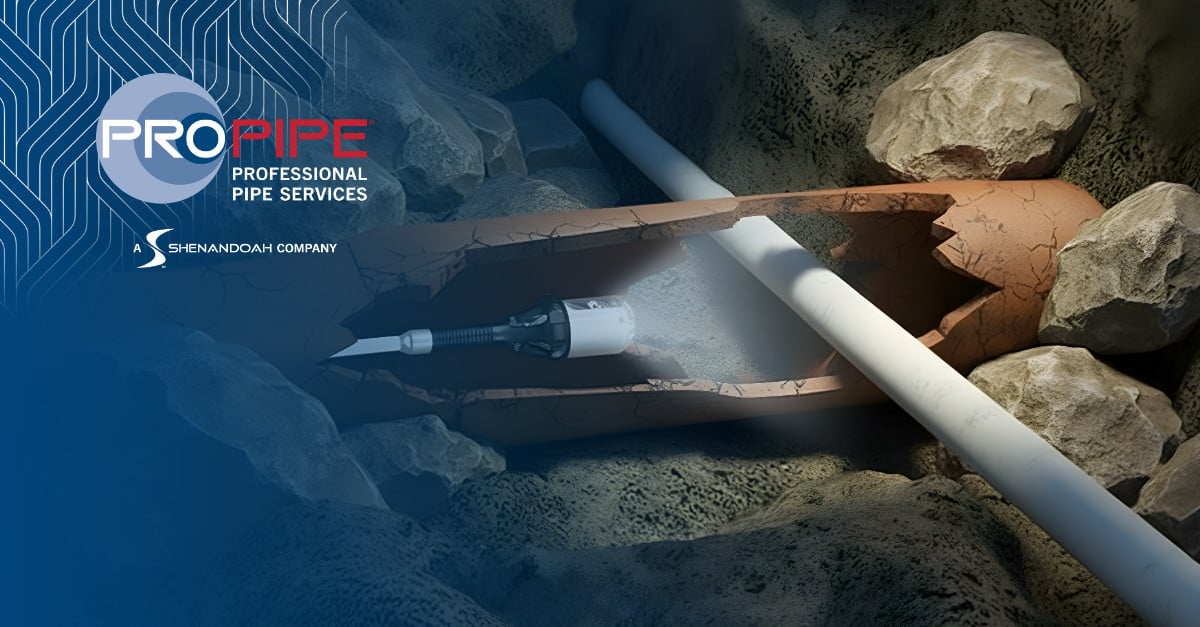
Horizontal directional drilling (HDD) is one of the most efficient ways to install utility lines with minimal surface disruption. But when HDD crews don’t have a complete picture of what’s underground, cross-bores occur. For engineers and contractors managing trenchless installations, cross-bore prevention and understanding what’s underground are core project responsibilities.
Know What’s Already There
Cross bore prevention starts before the first drill turn. Every HDD project moves through existing infrastructure–gas lines, sewer laterals, water mains, telecom conduits–much of it aging and poorly documented.
Gas line cross bores are the most dangerous. When a new utility line intersects a sewer lateral undetected, gas can migrate into the sewer system silently for months or years. Routine sewer maintenance becomes the trigger point, and the results can be catastrophic.
Don’t rely on utility records alone. Historical maps are often incomplete or entirely lack lateral data. Physical inspection is the only way to know what’s actually in the ground.
Inspect Before and After Every Bore
Pre- and post-installation inspection is the backbone of any HDD safety program.
Before drilling, inspect the sewer mains and laterals within your project corridor. This establishes a baseline of existing conditions and creates documentation that protects your organization if questions arise later.
After drilling, inspect again. Even careful HDD operations can create unintended intersections. Equipment deflects, and soil often shifts. A post-bore inspection confirms the work was completed without creating a cross-bore and catches any structural damage to existing pipes.
Use the Right Inspection Technology
Standard CCTV covers the main sewer line. But cross-bores happen in laterals, and if you’re not inspecting service laterals, you’re missing the most common point of conflict.
Robotic lateral launch systems allow inspectors to navigate from a manhole directly into each service lateral without excavation. The camera travels through the main line, pivots into each lateral, and captures footage all the way to the building foundation. This is the most effective tool for pre- and post-installation inspection on any HDD project.
Document Everything
Inspection data that isn’t organized and accessible doesn’t protect you. Every inspection should feed into a centralized system with date-stamped video tied to GPS coordinates. GIS-based inspection libraries provide municipalities and utility providers with a permanent record of their infrastructure, improving safety outcomes on every future project in the same corridor.
How Pro-Pipe Supports HDD Safety
Pro-Pipe offers one of the most comprehensive cross-bore prevention programs in the country. Our robotic lateral launch systems inspect sewer mains and service laterals directly from manholes with no excavation and no property disruption.
Our quality control team reviews every inspection and integrates it into a GIS-based, time-stamped library with GPS-linked video and cloud-based access. And with our 24/7 dispatch center, your project timeline stays on track.
Cross-bore prevention is most effective before an incident occurs, and Pro-Pipe empowers you to protect HDD cross-bore incidents at all costs.
Contact Pro-Pipe today to learn how our inspection programs integrate with your HDD workflow.